So, you’re ready to dive into literature circles! Except there’s one thing stopping you: literacy circles roles, the worksheets they need, and all the prep that goes behind creating a comprehensive lit circle.
That’s where this post comes in!
Running literature circles in a high school English class can be magical… or messy. On their best day, they’re a great way to get small groups of students engaged in meaningful discussion while practicing critical thinking and deep reading skills. On their worst day, they dissolve into off-topic conversations and uneven participation.
So, how do you make sure your literature circle meetings land closer to magical? By using literature circle role worksheets.
These aren’t just busy work or another grade for the gradebook. Done well, they are simple teacher resources that provide specific roles, clear expectations, and a consistent structure—so every student knows exactly how to contribute to the group.
In this post, I’ll talk about why you should use literature circle role worksheets, how to use them, and offer some suggestions for what they should look like.
If you happen to be leading a graphic novel literature circle, you can find done-for-you literature circle role worksheets inside my Graphic Novel Literature Circles Unit.

What Are Literature Circles?
Never tried a literature circle before? Literature circles are small, student-led discussion groups where each member reads the same text and takes on a specific role to guide the conversation.
They combine the structure of assigned reading with the freedom of collaborative exploration, giving students ownership over their learning.

Instead of the teacher leading every discussion, students prepare ahead of time and come ready to share insights, ask questions, and connect ideas. This makes literature circles especially effective for engaging reluctant readers and fostering critical thinking skills.
If you’re looking for a way to give students more responsibility for their learning but aren’t ready to remove all of the structure yet, literature circles are the perfect mix of teacher-led and total student independence!
While the approach can be adapted for any age group, in high school, literature circles work best when paired with purposeful role assignments, clear expectations, and texts that students are genuinely interested in reading.
If you want to learn more about literature circles themselves, check out this blog post.
Why Literature Circle Role Worksheets Are Essential
If you’ve ever told your class, “Okay, get into groups and discuss the chapter,” you probably already know what happens: a couple of students dominate, a few quietly check out, and the rest offer a sentence or two before drifting off-topic.
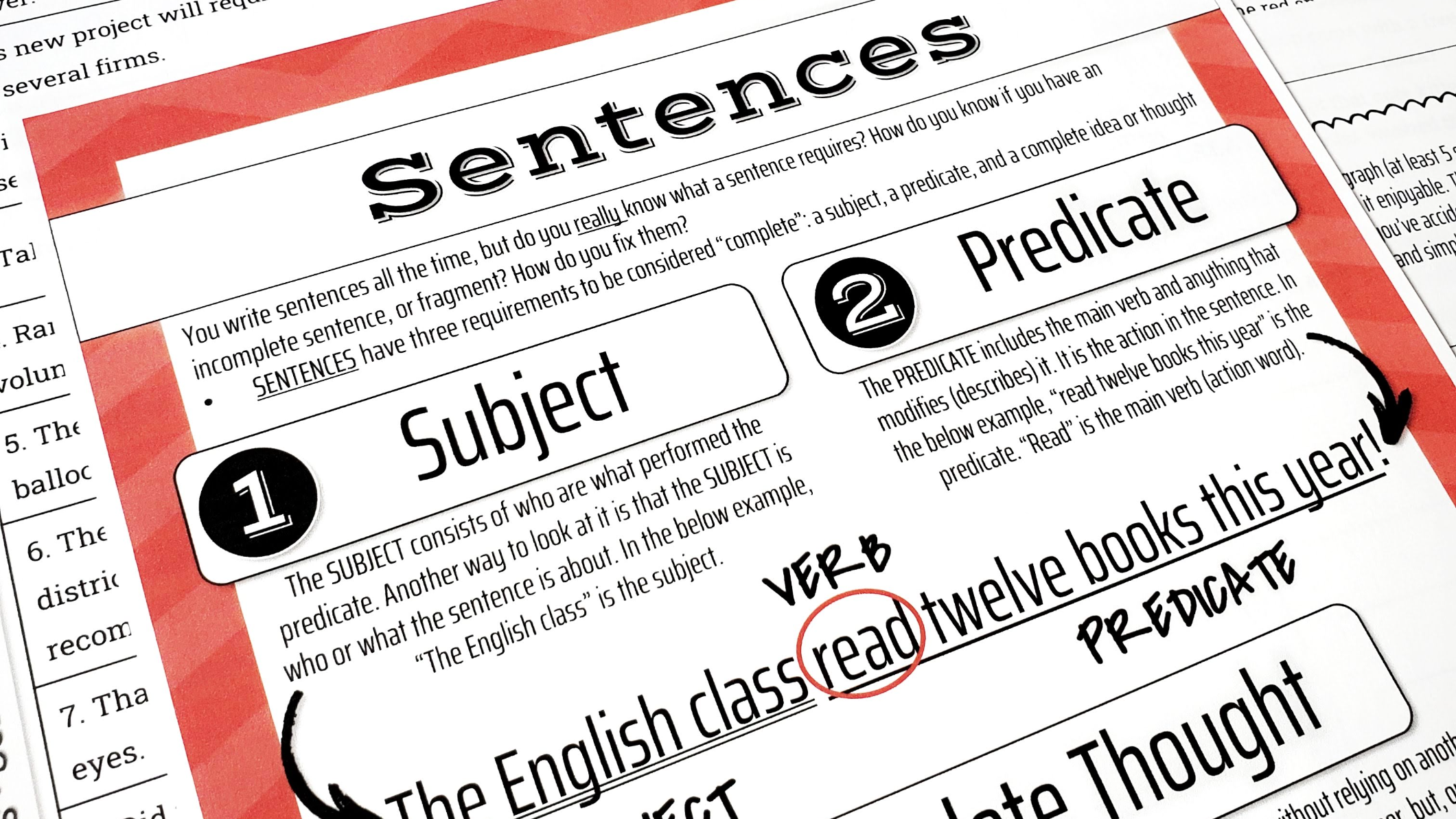
Literature circle role worksheets fix that problem by giving each student an assigned job, written job descriptions, and a recording sheet where they prepare their contributions.
Instead of vague instructions, students know:
- What to look for in the text
- How to prepare for their role
- When and how to share with group members
- How their work fits into the group’s success
If you want students engaged during their discussion, literature circle role worksheets are essential.
Besides engagement, they can guide students to dig deeper. Advanced students can narrow their focus so that they can go deeper instead of broader. Struggling students feel less overwhelmed with a singular job to do. Every student wins, and every student feels like they’ve contributed.
Whether you teach older students in high school, struggling readers in middle school, or even dabble in book clubs with short stories, literature circle role worksheets work at every grade level. They give structure without stifling student voice, and they make your literature circle discussions far more productive.
Common Literature Circle Roles to Include in Your Worksheets
One of the best parts of using literature circle role worksheets is that you can assign a wide variety of student roles.
I recommend choosing roles based on the skills you want to highlight during your unit OR based on the strengths of the text.
For example, if you really want students to work on analyzing character during your unit, be sure to include a “Character Captain.” For graphic novels, you might want to include a “Visual Analyst” who dives deeper into the images to find meaning and symbolism.
Here are some various roles to consider, along with a brief description of the literature circle role for each:
- Character Captain – Tracks character development, relationships, and important moments of change.
- Connector – Links the text to real-world events, social studies topics, personal experiences, or other media.
- Dialogue Decoder – Analyzes key lines of dialogue, explaining their meaning, tone, and impact on the story.
- Discussion Director – Creates open-ended questions for the group meeting to spark a meaningful way of looking at the text.
- Literary Luminary – Selects an important moment or short passage for close reading and discussion.
- Panel Tracker – Follows the sequence of panels in a graphic novel, noting layout, pacing, and visual storytelling choices.
- Prediction Expert – Makes predictions for the next section of the book using evidence from the text.
- Researcher – Brings outside context, such as information on the time period, the author’s life, or relevant topics like Native Americans or physical science concepts.
- Summarizer – Delivers a concise recap of the main idea and key events from the section of the book.
- Super Story Illustrator – Produces a visual arts representation of the reading for the rest of the group.
- Super Story Teller – Retells an event in their own words, sometimes creatively, to engage class members.
- Theme Tracker/Seeker – Identifies recurring themes, symbols, or motifs and explains how they develop across the text.
- Tone & Mood Monitor – Notes shifts in tone and mood, offering constructive feedback about how language shapes emotion.
- Visual Analyst – Examines illustrations, page design, and artistic style to explain how visual choices affect storytelling.
- Vocabulary Enricher / Word Wizard – Finds unfamiliar words, defines them, and shares how they shape meaning.
Look, I know some of the roles sound cheesy. You don’t have to give every role a cutesy name! And, in fact, if you’re teaching in high school, you may not want to.
It doesn’t matter what you name the role. All that matters is that students have a clear understanding of their purpose while reading. Choose a title for each role and provide a short description for students.
You can rotate specific roles every week so students get to try a new role and build different skills.
How to Use Literature Circle Role Worksheets in Class
Here’s a step-by-step approach to making the most of literature circle role worksheets:
- Assign the Roles – At the start of a reading cycle, hand out role cards or role pages so every group member knows their responsibility.
- Explain the Job Descriptions – For the first time, model what a completed recording sheet looks like. Walk through a sample text so students see the process.
- Give Preparation Time – Offer enough time in class or as homework for students to gather notes, quotes, and ideas for their role.
- Run the Literature Circle Meeting – During the group meeting, have each student share from their role worksheet while others listen and respond.
- Rotate Roles – Switch student roles each week or every section of the book so students experience different ways of contributing.
- Follow Up with Reflection – Have students jot down what they learned from other group members and set goals for next time.
- Extend the Learning – Use the content from literature circle role worksheets as inspiration for final projects—like a movie trailer, graphic arts poster, or a vocal music performance based on the text.
Rotating roles is important. If you choose every role based on a skill you want to cover, then students will have practiced four different skill in-depth over a month! When else do you get to have students practice a single skill set that deeply?
It will also help balance the workload. Some roles are going to feel a little easier or a little harder to certain students; by having students rotate through roles, you’re making your literature circle “fairer.”

What Students Can Do on Literature Circle Role Worksheets
The beauty of literature circle role worksheets is that they’re adaptable. Again, the job you have students do on their worksheets should focus on the skills you want them to practice.
Depending on the role, your worksheets can prompt students to:
- Write down important quotes from the reading and explain their significance
- Sketch big ideas or scenes (great for Super Story Illustrator roles)
- Jot down questions for discussion—both comprehension and deeper thinking questions
- Highlight unfamiliar words and define them in their own words
- Record page numbers for moments they want the group to revisit
- Map character relationships as they change over time
- Summarize the main idea of the section of the book in a few sentences
- Make personal or real-world connections to events in the text
- Note patterns or symbols they see emerging
- Predict what will happen next and explain why
- Respond to conversation starters or prompts you provide
- Reflect on how their role helped them understand the text better
By tailoring the worksheet prompts to each literature circle role, you make sure students are always prepared to contribute something meaningful to their literature circle discussions.
Troubleshooting Literature Circle Roles
Sadly, no matter how well you plan your literature circles and how much prep you do, you’re bound to run into some problems. Here are some of the most common issues and suggestions for how to handle them.
- If a student is chronically absent:
- Consider assigning that student a flexible role that can be completed independently and submitted digitally, such as Visual Analyst, Word Wizard, or Illustrator.
- You can also rotate roles less frequently so their absence impacts the group less.
- Another option is to add an extra, “less important” role to the group that the student will do every week. For example, groups might be able to do without a Summarizer (although their presence would help). A chronically absent student could be the Summarizer for the whole literature circle. Yes, that student receives less practice with essential skills, but at least the rest of the group doesn’t suffer for his or her absence.
- If groups are uneven:
- Some students can take on two smaller roles in one session (for example, Summarizer and Word Wizard) or split a bigger role (like Plot Mapper) into separate responsibilities.
- You can also have one role “float” between two groups to fill gaps.
- I recommend always having a “back-up” role you can fall back on. For example, if your class is twenty-one students, you might have three groups of four and one group of five. If you have a backup role, you can just give the group of five the extra role. (Make sure you have extra literature circle role worksheets to fall back on.)
- If a student finishes their role too quickly:
- Have them prepare two examples or extend their role into the next meeting. For instance, a Connector could prepare an extra connection to an outside source, or a Dialogue Decoder could explore how the same conversation might change in a different setting.
- You might also just have to check their work. For example, if a Researcher claims she’s done early, look over her worksheet. Could she research more topics? Cite her sources? Make connections between the text and history? Students that finish quickly may have only done surface-level work. Encourage them to go deeper.
- If students are struggling with their role:
- Provide role-specific sentence stems, guiding questions, or example notes.
- You can also model the role during a full-class discussion before assigning it to small groups. (For example, maybe you read the first chapter of a book or a short text as a whole class so you can model each role.)
- If a student is too quiet or dominating a conversation:
- Consider establishing discussion norms, such as “no one speaks twice until everyone speaks once,” before the weekly group meetings to keep the conversation balanced.
- You could also rotate discussion leaders to give quieter students more opportunities to guide the group.
- If you really need to intervene you could also “rig” the students roles and tell them what they’ll be doing. Maybe a quiet student is suddenly the Vocabulary Enricher, so he has to share his findings. Or a talkative student becomes the Super Story Illustrator so her contribution has to be mostly visual.
Why I Recommend Graphic Novel Literature Circle Role Worksheets
Graphic novels are a meaningful way to reach struggling readers, visual learners, and even reluctant participants. They’re accessible without being “too easy” for older students, making them perfect for mixed-ability literature circle groups.
My Graphic Novel Literature Circle Bundle includes:
- Literature circle role worksheets with clear job descriptions
- Group discussion logs
- Group discussion prompts
- A final project (a visual theme poster)
- Rubrics for both the project and the group discussions
- And more!
If you’ve been hesitant to try literature circles for the first time, or you’re looking for a more effective way to structure literature circle activities, this resource is a great way to get your feet wet. It takes hours of prep out of the equation, allowing you to dive right into your reading groups.
It also includes a comprehensive teaching guide with tips, suggestions for literature circle themes and titles, and so much more.
You can learn more about the resource and grab it today right here.

Conclusion
Literature circles can be an engaging and empowering way to help students take ownership of their reading and learning. By rotating roles, providing clear expectations, and offering diverse texts, you give students the chance to practice collaboration, critical thinking, and analytical skills in a student-led format.
These roles are critical for encouraging engagement, skill development, and important classroom discussions.
Whether you choose a theme like banned books or graphic novels, or let students select their own texts, the key is fostering a space where every voice matters and every perspective adds value. With a little planning and flexibility, literature circles can transform your classroom into a vibrant community of readers who challenge, inspire, and learn from one another.
Need a done-for-you unit? Grab my Graphic Novel Literature Circle Unit right here!