Apostrophes may be small punctuation marks, but they often cause big confusion for students. Whether it’s knowing where to place them in possessive nouns or how to use them in contractions, teaching apostrophes can feel like an uphill battle. That’s why having engaging and effective resources is crucial.
In this post, I’ll explore how you can make teaching apostrophes straightforward and successful with the right strategies and tools.
Want to skip the prep? I have a done-for-you Apostrophes Lesson here and an Apostrophes Quiz right here.

Why Do Students Struggle with Apostrophes?

Apostrophes are tricky because they serve multiple purposes: showing possession, forming contractions, and, in rare cases, pluralizing individual letters, numbers, and symbols.
Many students struggle to differentiate between singular and plural possession or confuse “its” and “it’s.”
There are also not really any consequences for making apostrophe mistakes anymore. Often, students rely on autocorrect to catch and fix apostrophe errors. Anyone reading their writing, which usually now includes social media posts or texts, probably doesn’t expect any grammar in your students’ writing.
Your students probably struggle with apostrophes because they haven’t seen a real need for getting them correct other than to please their English teachers. That’s why teaching students the importance of grammar is so important.
However, we English teachers know that proper apostrophe use is still vital.
By addressing common apostrophe errors directly, you can set your students up for success.
Before Teaching Apostrophes…
Before you dive into apostrophes, first, make sure your students are ready for apostrophes.
I know when I was reading student writing that punctuation errors would jump out at me first. I just wanted to fix them.
But the real problem wasn’t just that students were forgetting to use punctuation or being lazy–they had no knowledge of sentence structure, and therefore didn’t have any kind of foundation upon which to build punctuation knowledge.
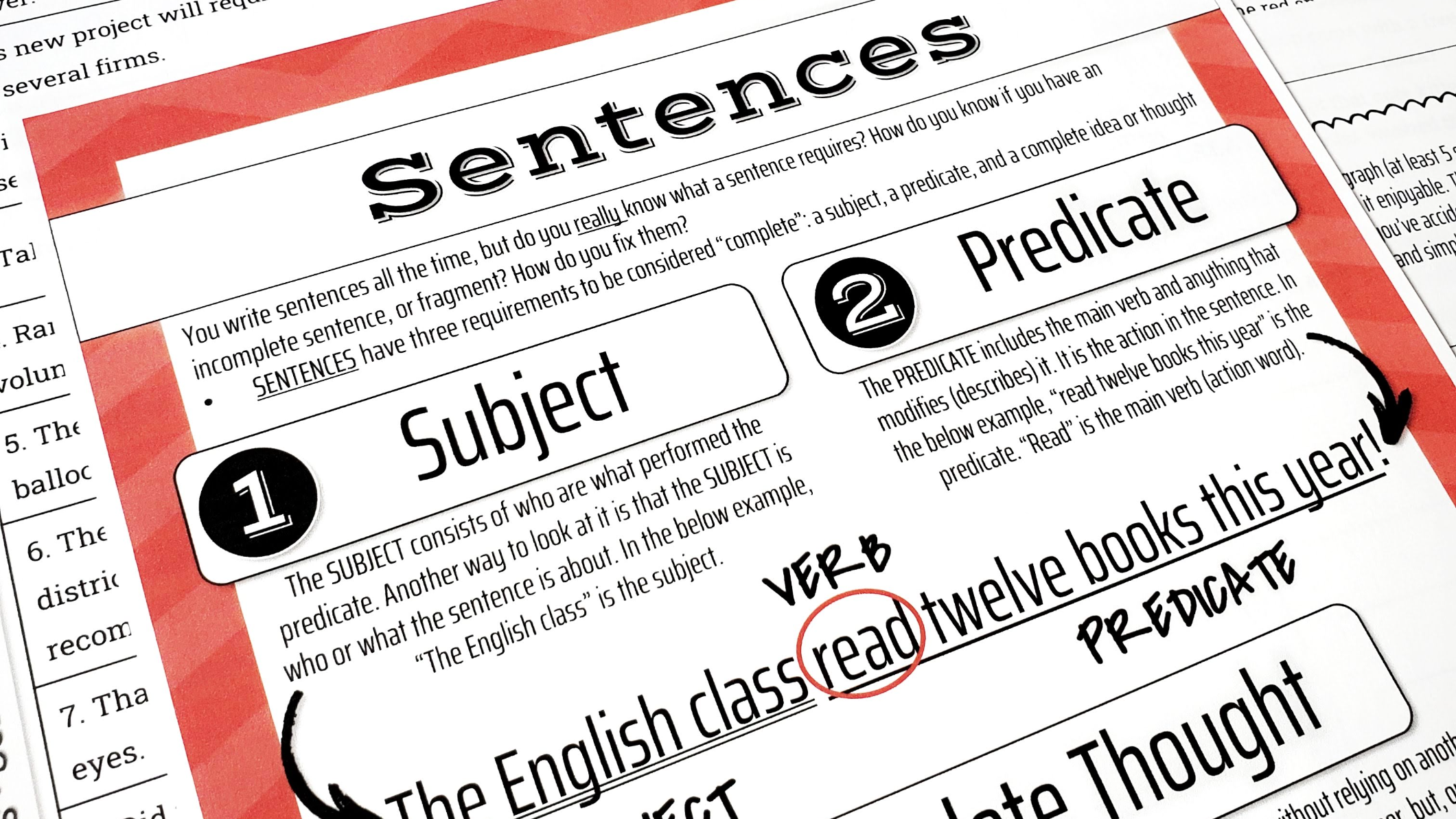
If you think your students need to learn the parts of a sentence, I have a blog for that here. If they still need to learn about sentence structure, you can check out this blog post. Or, if you haven’t talked to them about verbals, this post covers teaching them.
Not sure where your students stand? Be sure to give a pre-assessment.
That could be a worksheet, a writing assignment, or a formal pre-assessment like the one included in this set of Grammar Assessments.
However you do it, make sure that your students understand the fundamentals before moving on to punctuation.
Tips for Teaching Apostrophes Effectively #1: Break It Down
Teach apostrophes one rule at a time.
Start with contractions. These are easy and students will probably already know this rule. Let them feel good for already knowing something and give them the easy win.
Then, move on to possessive nouns. Don’t forget to cover irregular plural nouns, but leave them for after you’ve covered standard plurals.
Teaching rules incrementally helps prevent students from feeling overwhelmed and allows them to build confidence with each step.

Tips for Teaching Apostrophes Effectively #2: Provide LOTS of Examples and Talk About Them
Rule #1 of all grammar instruction: you can never have too many examples. So don’t be stingy with them in your apostrophe lesson.
Use clear examples for each rule. Some might tell you to use “relatable” examples, but it’s totally ok to throw your students some curveballs, too.
Once they seem to have grasped the basics of apostrophes for possession, start throwing in some irregular and confusing examples.
For instance, “the doctors office” could be punctuated as “the doctor’s office” OR “the doctors’ office” depending on the author’s intent. Take time to discuss examples like this and how punctuation choices can completely change meaning.
Tips for Teaching Apostrophes Effectively #3: Talk About The Itses
When teaching apostrophes, make sure you leave room to talk about one of the most frequent errors: mixing up “its” and “it’s.”
Don’t think that just discussing contraction versus possession is enough; you’ll want to devote plenty of time–even a whole lesson–to reviewing this mistake.
I recommend giving this error its own day or lesson as well as its own practice worksheet.
Encourage students to spot and correct errors in real-world sentences or their own writing. And when you move on from apostrophes to other punctuation marks, keep throwing in some “its” vs. “it’s” mistakes into future grammar reviews.

Tips for Teaching Apostrophes Effectively #4: Practice, Practice, Practice
Give students plenty of opportunities to practice identifying and correcting errors.
This can look like structured activities such as error hunts or fill-in-the-blank exercises.
Encourage repetition and mastery. Review worksheets are great for this, but incorporating apostrophe work into daily grammar bell ringers can be really beneficial, too.
Don’t forget that punctuation work doesn’t end with a few problems on a worksheet! Students should be using their new knowledge in real writing, so incorporate checking for apostrophe errors into peer review work, too!
Resources to Make Teaching Apostrophes Easier
If you’re looking for ready-made resources to save time and boost student engagement, I’ve got you covered. Here are two tools designed specifically for teaching apostrophes:
1. Apostrophes Lesson
This comprehensive lesson covers everything students need to know about apostrophes, including their use in possession, omission, and pluralizing individual letters, numbers, and symbols.
What’s Included:
- A detailed slideshow that explains apostrophe rules with examples and common errors.
- Interactive worksheets that guide students through identifying and correcting apostrophe errors.
- A reusable Apostrophes Handout for ongoing reference.
- Three quick exit tickets to check understanding.
- Editable Google Docs and Google Forms versions for maximum flexibility.
This lesson is perfect for both in-person and remote learning. The combination of visuals, activities, and self-paced options ensures every student can master apostrophes.
Explore the Apostrophes Lesson Here.
2. Apostrophes Quiz

Assess your students’ understanding with this quick and effective 10-question quiz. It’s designed to give you instant data on their progress and identify areas needing reinforcement.
What’s Included:
- Printable PDF, editable Google Doc, and self-grading Google Form options.
- Multiple-choice questions covering possession, omission, and pluralization rules.
- Answer key for easy grading.
This quiz pairs perfectly with the Apostrophes Lesson but can also stand alone as a quick check-in or review.
Check Out the Apostrophes Quiz Here.
Why These Resources Work
- Structured Learning: The lesson breaks apostrophe rules into manageable chunks, ensuring students aren’t overwhelmed.
- Engaging Practice: Activities and examples keep students involved and reinforce learning.
- Flexibility: Printable and digital formats adapt to your teaching style and classroom needs.
- Time-Saving: Pre-made materials let you focus on teaching rather than creating resources from scratch.
Final Thoughts on Teaching Apostrophes
Teaching apostrophes doesn’t have to be daunting. By using clear examples, addressing common mistakes, and incorporating engaging resources like the Apostrophes Lesson and Apostrophes Quiz, you can help your students confidently master this essential grammar skill.
Ready to simplify your grammar lessons? Explore these resources today and make teaching apostrophes easier than ever.
Shop the Apostrophes Lesson | Shop the Apostrophes Quiz
Looking for more grammar resources? Check out my Grammar Lessons Bundle for comprehensive, engaging lessons that cover all the essential topics.