
Verbals—gerunds, participles, and infinitives—are essential grammar concepts that can deepen students’ understanding of sentence structure. Not knowing them can lead to some major mistakes for students down the road. However, many teachers find it challenging to effectively teach verbals while keeping students engaged.
This blog post will guide you through a step-by-step approach to teaching verbals.
Want to skip creating your own lesson from scratch? Grab my done-for-you Verbals Lesson right here complete with slideshow, student handout, practice worksheets, and more!

Teach Verbals Step #1: Assessing Students’ Knowledge of Verbals
Not sure if students are ready to discuss verbals? Or maybe you’re sure they learned all of this stuff last year and you can skip it.

Better to assess and know for sure.
Give your students a quick assessment to see if now is the right time to teach verbals. This could be a writing sample, an exit ticket, or even a short worksheet.
If you need a formal grammar assessment that gives you a comprehensive view of your students’ grammar abilities, check out these Grammar Assessments.
You’ll want to make sure your students have a basic understanding of sentence structure, nouns, and verbs before tackling verbals. (For more information, you can check out my post, “How To Sequence Grammar.”)
Teach Verbals Step #2: Review Verbs
Since verbals are derived from verbs, a solid review of verbs is crucial. Even if you *just* taught verbs, start your lesson with a quick recap.
Don’t forget to cover irregular verbs like “to be” or “to have.”
Use examples to highlight how verbs function as the engine of a sentence. This foundational review ensures students can better understand how verbals differ from verbs.

Teach Verbals Step #3: Differentiate Between Verbals and Verbs
One of the most challenging aspects of teaching verbals is helping students recognize the difference between verbs and verbals.

I like to start by giving students a formal definition of a verbal and explaining how it differs from a verb.
- Verbs: Show action or state of being and have a subject performing the action.
Example: “She runs every morning.” - Verbals: Look like verbs but function differently—as nouns, adjectives, or adverbs.
Example: “Running is her favorite activity.”
Use clear examples to show how verbals serve different purposes in a sentence, making it easier for students to identify them. After students understand that a verbal is not a verb–more like another part of speech masquerading as a verb–you can move on to defining specific verbals.
I like to start with gerunds because I think they’re the easiest to understand. Students typically feel pretty good about nouns.
Then, I move on to participles. These are similar to gerunds (many have the -ing ending) and only function as one part of speech. I usually spend a whole day (at least!) just reviewing gerunds, participles, and practicing telling them apart.
Only once I feel that students have a basic understanding of gerunds and participles do I introduce infinitives.
Teach Verbals Step #4: Provide Lots and Lots of Examples
I’ve said this before, but you can never provide too many examples. This is especially true when it comes to anything related to grammar.
As you go over gerunds, participles, and infinitives, it’s important to give students tons of examples of each. Try to trick them. Make your examples more complex and irregular as you go.
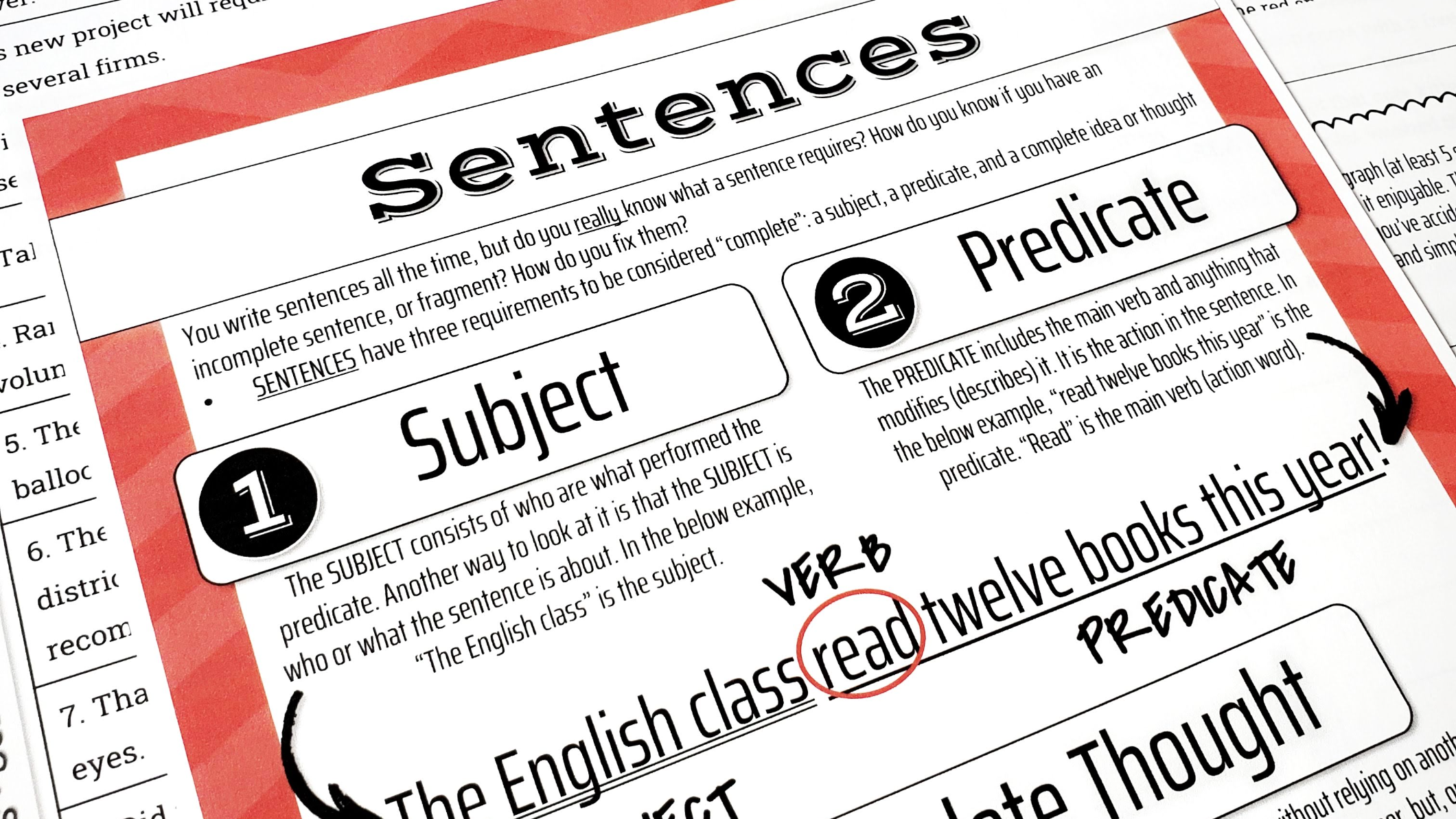
Teach Verbals Step #5: Giving Students Time to Practice
Once students understand the basics, give them opportunities to practice identifying and using verbals. Activities could include:
- Labeling verbals in sample sentences.
- Writing their own sentences using gerunds, participles, and infinitives.
- Transforming verbs into verbals and discussing how the meaning changes.
My Verbals Lesson includes tons of worksheets that will have your students practicing in a multitude of ways. Daily grammar warm-ups are another way to keep students practicing.
Teach Verbals Step #6: Assess Learning

After giving students plenty of time to absorb material and put it into practice, you’ll want to assess (or re-assess) what they know.
In my Verbals Lesson, I include an exit ticket to make informal assessment easy. You could also just grade a verbals worksheet and use those grades to inform you about your teaching.
If you want something a little more formal, but still quick, you can give a short quiz. I have a 10-question, multiple choice Verbals Quiz here. It’s printable and digital, but the digital version is self-grading for even faster results.
Whatever assessment you choose to use, make sure it’s quick. If it takes you weeks to grade, it won’t be effective for informing your instruction.
If students have become verbals masters, I recommend moving on to teaching punctuation!
Why Recognizing Verbals Matters
It’s important to emphasize that students don’t need to become masters at identifying verbals. Ten years from now, they’re not going to need to be able to define the difference between gerunds and participles. (Except for maybe that one kid who does go on to be a linguistics major.)
What matters most is understanding the distinction between verbs and verbals.
Knowing whether a word is functioning as a verb or something else in a sentence enhances their overall grammar skills and helps them craft clearer, more effective writing.
Emphasize that while you’re teaching the different kinds of verbals right now, remembering the names of each isn’t an important life skill. I think you’ll find it takes some of the pressure off of your students.
As long as, once the lesson or unit is over, they know a verbal is not a verb, you’ve done a great job. And so have they.

Next Steps
Ok, so your students are masters at verbals. Now what?
If you are focused on upleveling your students’ grammar skills, I recommend moving on to punctuation.
Once students have an understanding of verbals, they probably have a solid grasp on general sentence structure. This means they have all of the necessary foundational skills they need to start understanding how to use punctuation correctly.
If you want a guide for sequencing all of this, check out this post.
If, instead, you’re focused on students writing well–rather than just correctly–you have two options.
The first is to dive deeper into verbals. Try teaching students about dangling participles as a common error and how to fix them.
Or, you can teach students about active and passive voice. I like to teach verbals before active and passive voice because it reduces the odds that students will identify the wrong verb in a sentence and thus, frustrate their attempts to change sentence voice.
Check out this post about active and passive voice worksheets.
Conclusion
Teaching verbals is an essential part of high school grammar instruction. By starting with a solid review, using relatable examples, and giving students time to practice, you can help them master this tricky concept.
Ready to simplify your planning? Check out my ready-to-use lesson on verbals and give your students the tools they need to succeed!