You’ve just read your students’ first essays of the year, and you’re horrified. You expected some comma errors, but those papers are downright unreadable! Where do you go from here? In this post, I’m going to show how to teach punctuation to high school students who just don’t get it.
If you’d like to save a whole lot of time (or don’t feel super confident with grammar yourself), be sure to check out my Grammar Lessons Bundle. They’re sequenced so that each lesson builds on the previous one.
If you need tips on sequencing your grammar lessons, this blog post lays it all out for you.

How To Teach Punctuation Step #1: Establish Students’ Baseline
It’s hard to know where to start if you don’t know where your students are right now. So, the first step is to figure that out.

If you did just have students turn in some writing, that can give you a clue. You might have an idea of where they’re struggling from their writing samples.
If it’s early in the year–or you know you want to gather some data right from the start–you can give students a grammar pre-assessment.
Make sure that you have a matching post-assessment to go with that pre-assessment. (You can grab my Grammar Pre-, Mid-, and Post-assessments here if you don’t have time to create your own.)
Your students might be great writers who struggle with grammatical details. In that case, you can jump right into punctuation. But if your students’ sentences don’t make sense, or they’re not even using end punctuation, you might have to go back further in your lessons.
How To Teach Punctuation Step #2: Make Sure Students Have A Solid Foundation
So, you’ve gathered your data and established a baseline. If your students already seem to understand how to craft a sentence, you can go ahead and move into punctuation!
But if your students are struggling with fragments, run-ons, or correctly using end punctuation, I’m sorry. You’ll have to go back to basics.
So many grammar rules hinge on students understanding independent vs. dependent clauses that I recommend you make sure you cover this concept thoroughly before discussing punctuation.
(You can learn more about teaching clauses in this blog post!)
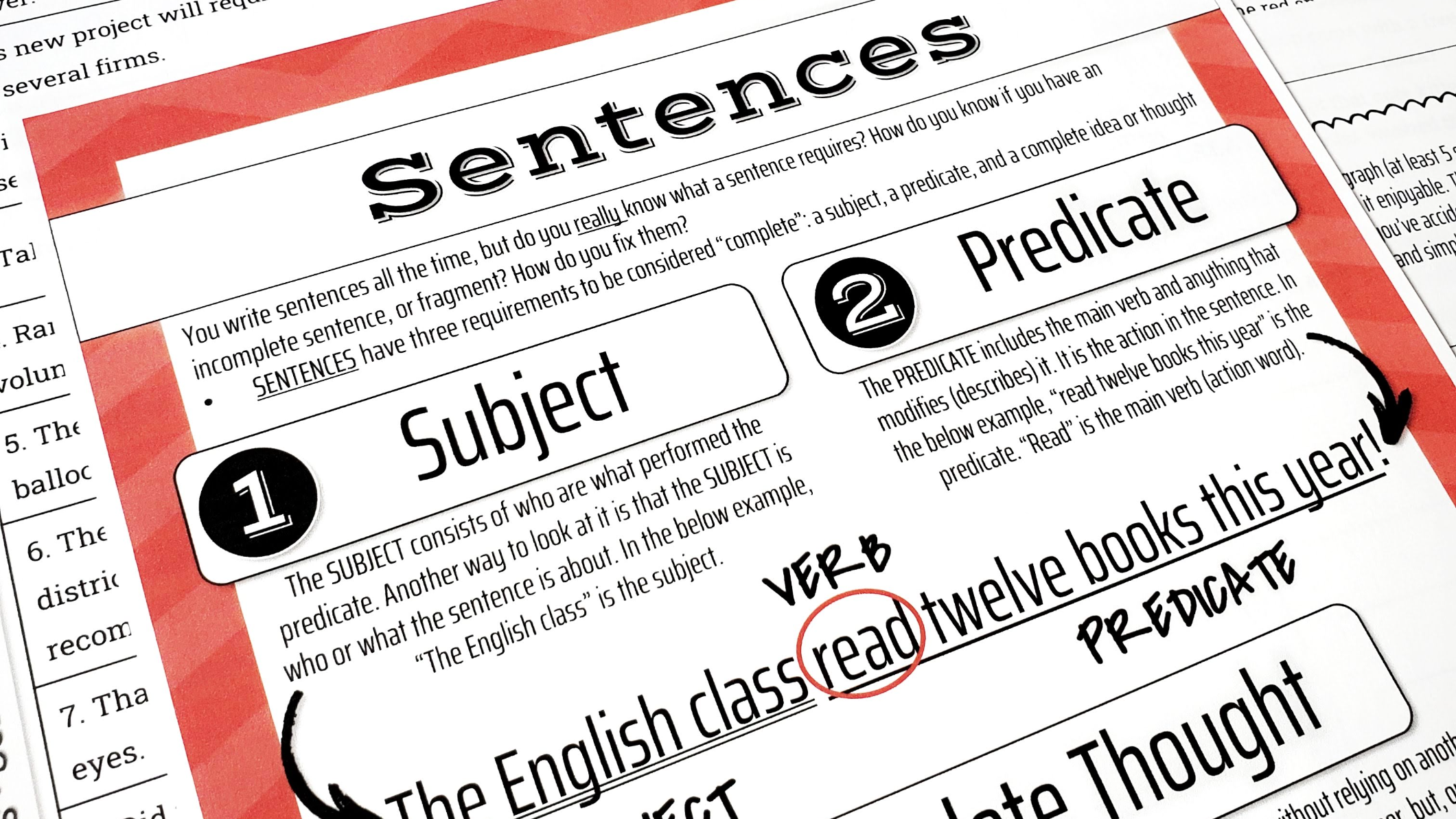
In my own classes, I tried to teach three essential lessons before moving on to punctuation: part of a sentence (subject and predicates), sentence structure (simple, compound, etc.), and verbals.
(You could skip verbals, but if I have time, I like to cover them. It makes explaining why students incorrectly identified a verb later much easier.)
Don’t jump straight into punctuation if your students can’t even identify a correct sentence from an incorrect one!

How To Teach Punctuation Step #3: Ease Into Punctuation
Now you can finally work on punctuation skills! Hooray!
But proceed gently.
Many students (and even some English teachers!) have this kind of grammar PTSD. You want to go slowly and start with the easier punctuation to help students build confidence.
In my grammar sequencing blog post, I go into more detail, but I like to start with apostrophes first. Students will probably know some rules about apostrophes already; they can begin their punctuation journey feeling informed.
From there, I work on other punctuation marks like colons, semicolons, hyphens, and dashes.
Most importantly, I leave commas for last. Why? They’re so complicated! They have so many rules!
If you teach the other punctuation marks first, students will learn some comma rules along the way. They’ll learn about commas in a list from your colon lesson. They will have learned about commas and coordinating conjunctions from your lessons on sentence structure.
By leaving commas last, you’re teaching students comma rules early and slowly. By the time you actually get to your comma lesson, students will know most of the rules. This builds their confidence and shrinks the time it will take them to “get” commas.
How To Teach Punctuation Step #4: Assess
Assessing whether or not your students have mastered punctuation can take on many different forms.
This could be a large piece of writing. (Don’t forget to put grammatical conventions in your rubric!)

It could be a major test or post-assessment.
Of course, I recommend assessing grammar growth along the way. Make use of exit tickets, low-stakes quizzes, a mid-assessment, worksheets, and anything else you can along the way. (And if you need these things, they’re all included in my Grammar Curriculum Bundle.)
Any time students seem stumped, take the class time to pause and re-teach. I know it’s stressful to feel behind in your lesson plans, but which is worse: having students kinda know some things, or having students know the basics really, really well?
I promise you’ll have more confident, less stressed students if you approach grammar and punctuation at a slow and steady pace.
How To Teach Punctuation Step #5: Work With Your Colleagues
That’s right. If you really want to get radical and help your students master grammar, take it to the streets.
Er, hallways.
Work with your English team to scaffold these grammar lessons across the four years of high school. That way, each teacher is playing less and less catch-up.
And once your team has a plan in place, let the other teachers know. The senior-year social studies teacher shouldn’t accept comma splices if the whole school learned about them junior year.
You can help your students improve a lot in one year. This is an area in English where I really do believe we can make a huge difference when our students are way behind.
But you still might not be able to catch them up entirely in just a year. They’ll need help from their other teachers as well.

Conclusion
If you learn that your students’ punctuation skills are lacking, don’t worry. There’s so much you can do to help them turn it around!
But you will have to have a plan, sequence your lessons, and devote some time. A one-off semicolon lesson and a grammar worksheet given by a sub aren’t going to do it.
If you need help or simply don’t have a time to put together a plan yourself, my Grammar Lessons are a great place to start!
