Teaching colons doesn’t have to be boring! These little punctuation marks can add clarity, emphasis, and even a bit of drama to writing. But before students can confidently use colons, they need a solid foundation in sentence structure and punctuation rules. I’m going to go through some colon activities you can use to help your students master colons without the frustration!
Full disclosure: I think these tips would work in middle school, but my background is teaching high school ELA.
Make sure that whatever activities you use, you use example sentences, lesson plans, or colon worksheets with content appropriate to your age group. You can teach colons in 2nd grade ELA or even in higher education; getting the skills to stick with your students is the tricky part.
If your students need some colon instruction stat, but you just don’t have the time to prep everything, grab my done-for-you Colon Lesson here! It includes a slideshow, worksheets, student handout, exit tickets, lesson plan, and more!

Why Teach Colons?
The most pragmatic answer to this question is this: colons are a requirement in Common Core.
They show up on the grade 9-12 language sections. So, if you’re teaching high school English language arts, it’s expected that you’ll teach colons–at least if your district uses Common Core.
But regardless, colons are an essential tool for every writer. Students need to be able to correctly add a second clause to a main clause or add a list of items. Colons are a powerful tool for clear and effective writing, yet many students struggle with using them correctly.
Understanding colons also strengthens their grasp of sentence structure and punctuation, which benefits their overall communication skills.
Knowing how to use a colon isn’t just an English class skill either. If your students can flawlessly bust out a colon in their writing, it will show up in their other classes–social studies, graphic arts, even physical education. Anywhere students have to write will be a place where their ability to use a colon benefits them.
Mastering colons also prepares students for higher education and professional writing, where clarity and proper punctuation are essential.
By making colon lessons engaging and interactive, you can turn what might seem like a minor grammar rule into a valuable writing skill.
Before Teaching Colons: The Must-Know Basics
Before diving into colons, make sure your students have a strong grasp of a few key concepts. Otherwise, colons will feel like just another confusing rule instead of a powerful writing tool.
Want more information on how to sequence your grammar lesson? This post breaks it down.
Pre-requisite #1: Sentence Structure and Flow
Colons add emphasis and introduce lists or explanations, but they only work when the sentence leading up to them makes sense on its own.
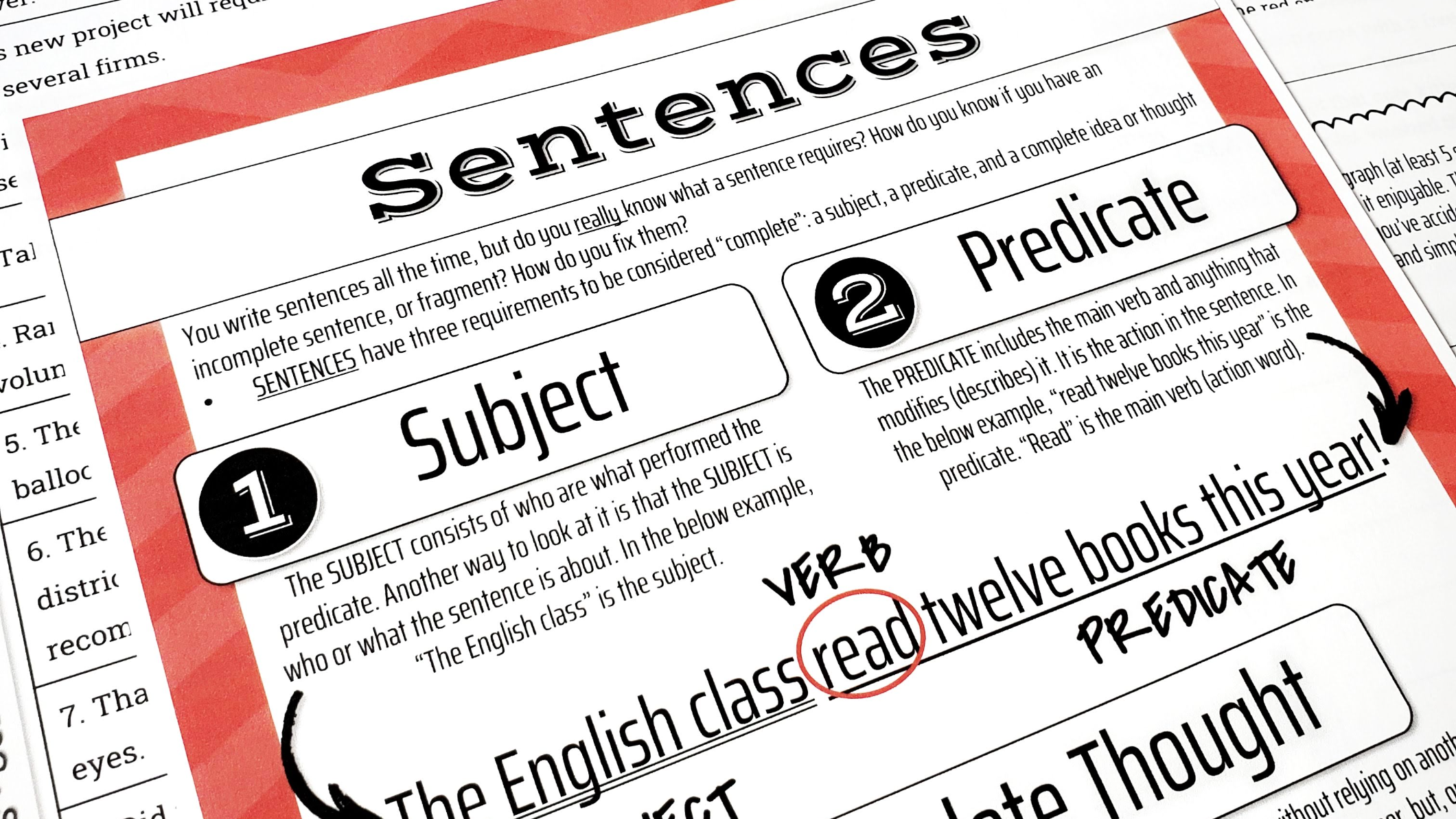
Before I ever dive into punctuation with my students, I make sure they know the basics. The need to understand nouns, verbs, subjects, predicates, and independent and dependent clauses.
If students can’t identify correct sentence structure, they’ll never be able to identify correct punctuation.
Give students plenty of practice with breaking long, complicated thoughts into clear, structured sentences. Have them fix run-ons and fragments. Be sure they can write an original sentence–correctly–before adding in complex punctuation.
If you need help teaching the basic parts of a sentence, check out this post here.
Pre-requisite #2: Independent Clauses
A colon usually follows an independent clause—a fancy way of saying a complete sentence that can stand on its own. If students don’t know what that means, colons will trip them up fast. Spend some time reviewing sentence structure and making sure they can identify independent clauses easily.
If you haven’t covered sentence structure yet, this post shows you how!
Pre-requisite #3: Easier Punctuation Marks
I like to teach apostrophes before colons, personally. I think they’re a bit easier to grasp since students generally understand contractions pretty well.
You could teach semicolons before or after colons. It’s up to you. (I talk about teaching semicolons here!)
(But make sure you emphasize the differences between a colon and a semicolon! It’s worth it to spend a whole day on a worksheet or activity dedicated to just this. Some might even do an entire colons and semicolons punctuation unit.)
Personally, I like to teach commas last. If you teach colons first, students will learn how to use commas in a list. Then, when you get to commas, that will be one less new rule they’ll have to learn! Use of commas is so complicated that I like to introduce the rules slowly over the semester or year if I can.

Colon Activities #1: The Lesson
Now that students have a strong foundation, it’s time to introduce colons in action.

When it comes to teaching complete grammar, I’m a solid believer in direct instruction. There are times you can work in scavenger hunts, hands-on activities, and creative writing projects, but I firmly believe that every new grammar lesson needs to begin with direct instruction.
My Colons Lesson here includes a slideshow that covers everything students need to know.
The following are the big ideas you’ll need to cover in your lesson.
Introducing a List of Items
This is probably the most common use of colons. When an independent clause introduces a list, a colon sets it up perfectly.
Example: “I packed everything I needed for the trip: a tent, a sleeping bag, a flashlight, and marshmallows.”
Make this interactive by having students create their own lists using colons—bonus points if they make them silly or creative!
Adding Emphasis or Explanation
Colons aren’t just for lists. They can also be used to emphasize a point or explain something in a dramatic way.
Example: “There was only one thing left to do: run.”
Have students write short dramatic sentences using colons. You’ll be surprised how much fun they have with this!
Introducing a Quotation
Colons can also introduce a quote when the first part of the sentence is a full statement.
Example: He always reminded us of his favorite saying: “Hard work beats talent when talent doesn’t work hard.”
(This is also a great time to teach or review rules around quotation marks!)
Try a writing challenge where students find quotes from their favorite books and introduce them using colons.
Colon Activities #2: Independent Practice
After teaching students how to use colons, make sure you give them time to practice.

In my Colons Lesson, I recommend teaching each way of using a colon and then immediately giving students time to practice just that one situation. The lesson includes a worksheet packet with activities for each colon rule.
Have students do independent work first, walking around the room and answering questions or checking answers. Make sure all students are practicing. Then, you can go over the trickiest problems or have students work together to check one another’s answers.
While they might not be super popular, I do recommend having a series of worksheets for students to practice colons.
I also recommend having some extra you can pull out as review when needed. This collection of worksheets includes 24 Seasonal Grammar Worksheets, so you always have a review ready when you need one!
Colon Activities #3: Assessing Student Growth
Once students have practiced using colons, it’s important to assess their understanding. Here are some effective ways to check their progress:
Assessment Idea #1: Exit Tickets
At the end of a lesson, give students a quick exit ticket where they must correctly use a colon in a sentence. This provides instant feedback on who’s mastering the concept and who needs extra practice.
My Colon Lesson includes exit tickets with the lesson. It’s such a time save for any English teacher!

Assessment Idea #2: A Quiz
A short quiz with multiple-choice and sentence-revision questions can help reinforce the correct use of colons. Include common mistakes to test their ability to recognize errors.
This Colons Quiz was designed for easy classroom use. It includes a printable version or an online self-grading version if you’re teaching in an online community.
Assessment Idea #3: A Formal Test
For a more comprehensive assessment, add a punctuation section to a larger grammar test. Have students correct sentences, identify proper colon usage, and even rewrite sentences to include colons correctly.
These three aligned Grammar Assessments are perfect if you need a big test or to track student data across an entire semester or year.
Resources to Make Teaching Colons Easy
Need ready-made resources? My Colon Lesson has it all:
- Straightforward Lesson: The included slideshow covers all the different ways to use a colon with examples. There are also stopping points throughout the lesson in which students will practice the skill taught.
- Colon Worksheets: The worksheets that come with this lesson include clear examples and exercises. Each also has an answer key for quick and easy grading. There’s no such thing as too much punctuation practice.
- Reference Handout: Student resources are just as important as teacher ones. The included student reference handout can be reused by your students all year.
- Exit Tickets: Your English Language Arts department might require quick formative assessments like these. Use the included exit tickets to a quick check on student understanding.
- Lesson Plan: What good is a lesson without a plan? The included lesson plans break down every step of using this resource for you.
When you’re ready to assess students on your punctuation lesson, I also have a Colons Quiz you can use.

Final Thoughts on Colon Activities
Colons might seem intimidating at first, but with the right activities, students can master them with confidence.
By building up their understanding of sentence structure and punctuation first, then introducing colons in fun and engaging ways, you’ll set them up for success.
If you need to cover colons and don’t know where to start, check out my done-for-you Colons Lesson!