If you’re wondering how to teach commas without your students glazing over by slide two, you’re not alone. Teaching commas is so much more than handing out a comma worksheet and calling it a day. Comma use involves nuance, multiple grammatical rules, and—let’s be real—a lot of practice problems.
Whether you’re teaching 2nd grade or high school English grammar, comma lessons are a staple in your grammar units. But before you dive into anchor charts and comma activities, let’s take a closer look at what students need to know first.
(Want to skip the prep and just dive in with your students? Grab this Using Commas Lesson and say goodbye to comma confusion!)

What Students Should Know Before You Teach Commas
Commas are, in my opinion, the trickiest grammatical concept there is. There are just so many comma rules, and your students won’t be able to put them into practice unless they have a solid grasp of sentence structure.

So, before jumping into the use of commas, make sure students have a solid grasp of sentence structure and other simpler pieces of punctuation.
Students should already be familiar with:
- Complete sentences vs. fragments
- Independent clauses and dependent (subordinate) clauses
- How to identify the main part of the sentence
- Basic punctuation marks like apostrophes, hyphens/dashes, colons, semicolons, and quotation marks
This prior knowledge sets the stage for more complex grammar skills like identifying comma splices, avoiding run-on sentences, and using commas correctly in compound and complex sentences.
Plus, students will have to learn a few basic comma rules along the way. (For example, they’ll learn how to use commas with coordinating conjunctions when they learn about fragments and run-ons.)
This way, students will already know a good number of comma rules before they learn them formally. And you won’t have to teach all of them at once.

How to Teach Commas
Ok. Now that your students have a solid foundation, how do you actually teach commas?
1. Pre-thinking
Check in with students and have them do some pre-thinking before you dive into a lesson.
How do they feel about commas? Can they draw one? What rules do they remember about commas?
This will serve as an informal pre-assessment for you, but it will also build confidence for your students. Seeing all of the comma rules they already know will make diving into new ones less scary.
2. Direct Teaching
I know it’s not exciting or innovative, but I believe the best way to teach is to, well, teach.
At some point, you’re going to have to tell your students about commas and all of their rules.
I recommend breaking this up into small chunks. Throwing all of the comma rules at your students in one class period is going to overwhelm them–and lose their attention.
Instead, introduce a comma rule and then immediately give them time to practice it. Then, rinse and repeat for the next one.
Which brings us to….
3. Immediate Practice
If you teach students about using commas in a list, don’t move on to the next rule.
Instead, assign a task immediately in which they get to practice this.
This will help that new information sink in immediately. It will also help you find holes in students’ understanding sooner rather than later.
Worksheets feel like a dirty word, but this is one place where they really work well.
Teach your students a comma rule, and then give them a worksheet immediately that allows them to practice it.
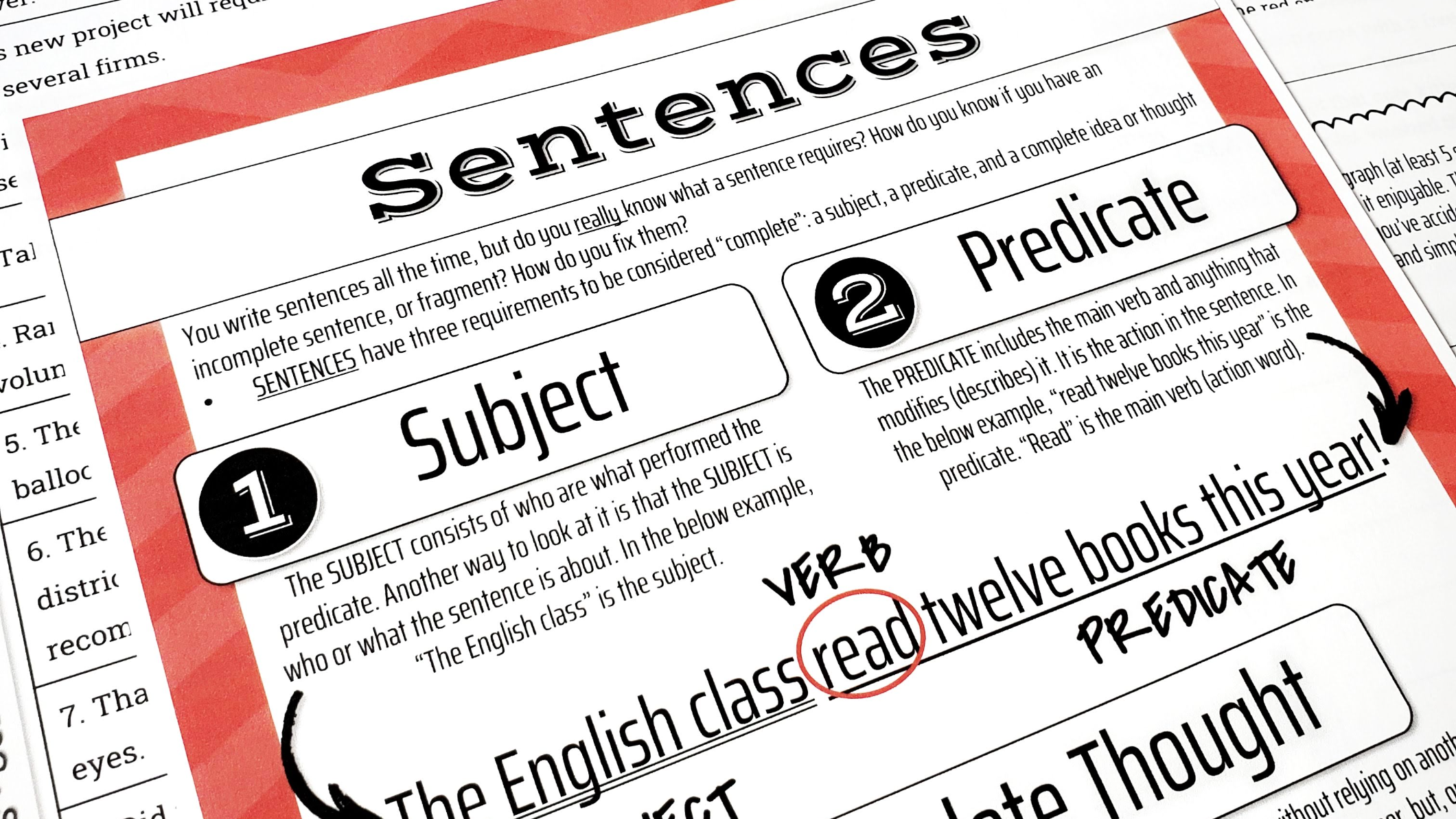
My Using Commas Lesson is designed to do this. After each comma rule is introduced, there’s a pause built into the slideshow and a corresponding practice activity.
4. Scaffolds
Even we teachers sometimes need to review our comma rules. So, it’s no surprise that your students will benefit from having some additional resources.
Consider adding an anchor chart to your classroom with comma rules.
My Using Commas Lesson includes a comma handout with the rules that your students can refer back to.
Maybe you want students to fill out guided notes during your lesson, or maybe you introduce them to a catchy song or acronym to help them remember.
Whatever you do, make sure you give students another tool they can continue to use long after your lesson is over.
5. Assessment
After students have learned about commas and been given plenty of time to practice their new understanding, don’t forget to assess them.
This can be informal. Maybe you collect and grade a worksheet. Maybe you play a grammar game or assign some comma task cards.
It could also be more formal like a quiz or a test. (You can get my Commas Quiz right here.)
But an assessment will reassure you that students “got it.” Or, it will point out where students are still struggling.
You need to make sure that students really learned before you move on.
6. More Review
Just because students passed the assessment doesn’t mean that comma knowledge is locked in for life.
No, sadly, our jobs are not done.
You still need to keep reviewing commas continuously.
One way to do this is to occasionally assign a grammar review worksheet.
Another important method of review is to make grammar a part of every writing rubric. This way, students are forced to synthesize their new grammar knowledge with other skills and to keep working on them. Plus, they’ll practice grammar even more when peer-editing another’s work.
You could also periodically assign a grammar-related assignment or activity like these Grammar in Context Independent Reading Exit Tickets!

Focus on the Most Common Mistakes
When you teach commas, it’s helpful to zoom in on the common mistakes students make—because that’s where the lightbulb moments happen.
Here are some issues worth highlighting:
- Comma splice: When students join two independent clauses with just a comma (without a coordinating conjunction).Fix it: Add a conjunction, or use a semicolon or period.
- Missing commas in direct address: “Let’s eat Grandma” vs. “Let’s eat, Grandma” is a great example of how comma usage changes the meaning of the sentence.
- Confusing coordinate adjectives with non-coordinate ones: If students can insert “and” between the adjectives and reverse the order, they need a comma.
- Not using the Oxford comma (also called the serial comma) in a series of phrases, words, or clauses. Teach both sides of the debate—but let’s be real, Oxford comma forever.
Use of Commas for Extra Information
Students often struggle with commas that set off nonessential clauses, appositive phrases, and parenthetical phrases. Try using mentor sentences to show how commas add clarity by separating extra information from the rest of the sentence.
Pair these examples with close reading activities to show how punctuation impacts the meaning of a sentence—a great way to incorporate literary analysis and grammar lessons into one.
Tools to Reinforce Comma Lessons
No lesson is complete without practice and application. Here are some resource ideas you can mix and match to add even more practice:
- Comma task cards for small group or writing center work
- A comma worksheet with an answer key for independent practice (check out these Grammar Review Worksheets!)
- Real-world examples from a historical editor (check out how commas evolved!)
- Practice with tag questions, introductory words, and adverbial clauses
- Daily grammar bell ringers
Final Thoughts on Teaching Commas
Teaching students how to use commas doesn’t have to be dull. With the right scaffolding, hands-on comma activities, and a few well-timed jokes about eating Grandma, you can make grammar lessons memorable and effective.
The use of the comma is one of the most important punctuation marks in English grammar—and mastering it unlocks better writing, clearer thinking, and fewer red marks on papers.
Want to skip the tedious process of creating slide decks and worksheets? Grab my Using Commas Lesson and never have to correct another comma splice again!